Your First Month of Roller Skating: What Adults Should Actually Expect
Jun 22, 2026
If you've just started roller skating and feel like:
"Shouldn't I be better by now?"
"Why am I still so wobbly?"
"Am I doing something wrong?"
I want you to know something before we start:
Almost every adult beginner thinks this in the first few weeks.
I hear it from students all the time because when you start skating, it’s easy to assume progress should happen quickly.
But learning to roller skate as an adult often looks a lot messier than people expect.
One good session.
One frustrating session.
Tiny wins.
Self doubt.
Then suddenly… things start clicking.
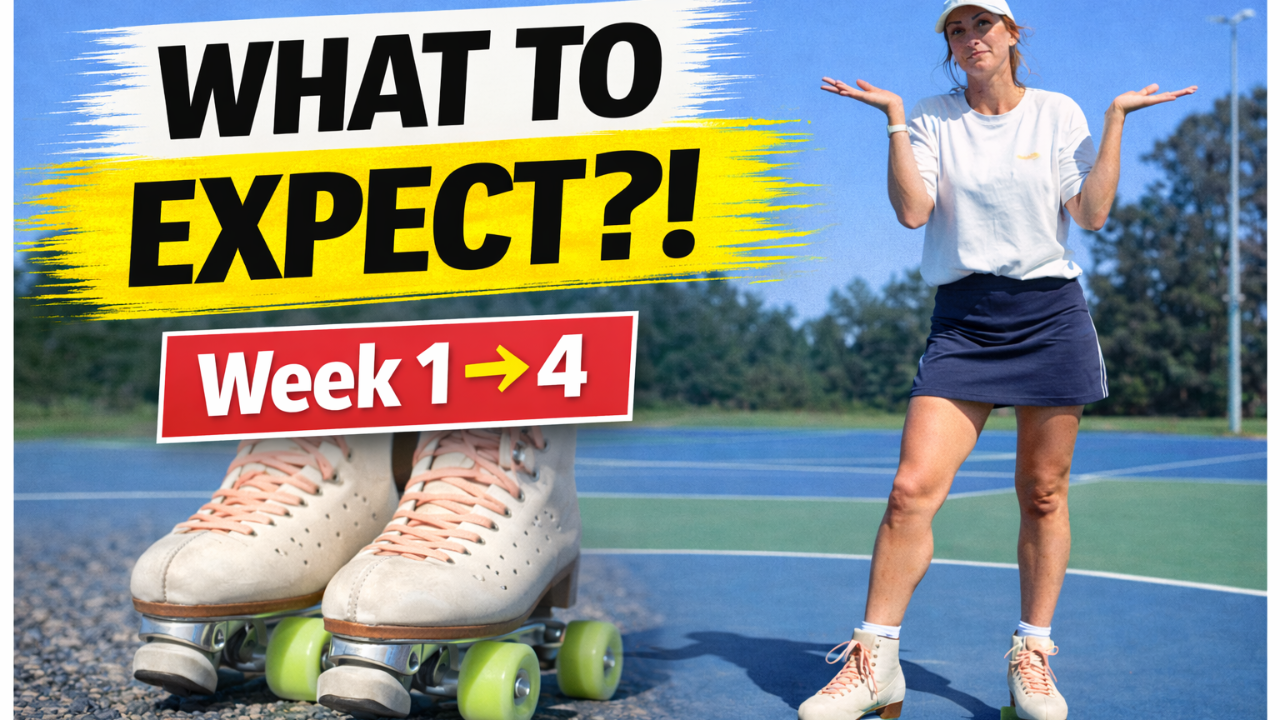
So if you're wondering what your first month learning roller skating actually looks like, let’s break it down.
Key Takeaways
✔ Feeling awkward in the beginning is completely normal
✔ Progress in the first month is often up and down
✔ Confidence usually comes after repetition
✔ Most beginners improve slower than they expect
✔ Foundations matter more than learning tricks early
✔ Many adults quit right before skating starts feeling easier
Quick Answer: How Long Does It Take To Feel Comfortable on Roller Skates?
Most adults don't feel consistently comfortable in the first week or two.
For many beginners:
Week 1–2: awkward, wobbly, overwhelmed
Week 3: slightly more natural
Week 4+: confidence slowly builds and skating starts feeling more enjoyable
Everyone is different.
But struggling early doesn't mean you're behind.
Week 1: Everything Feels Weird
This stage can feel rough.
Your balance feels off. Your feet feel strange. You’re thinking about every tiny movement.
Sometimes people start wondering:
"Am I crazy for deciding to learn roller skating?"
I’ve seen students ask:
"Shouldn't I be better already?"
Even after one or two weeks.
The answer?
No.
Your body is learning something completely new. Of course it feels uncomfortable.
What beginners often feel in Week 1:
• wobbly
• nervous
• stiff
• mentally overwhelmed
• scared to fall
• unsure if they're progressing
All normal. You are not behind.
Week 2: One Day Feels Amazing… Then You Forget Everything Again
This stage catches people out.
Because suddenly:
One session feels good.
Then the next session feels awful.
You think: "I thought I had this?"
This is usually where frustration creeps in.
The truth is, learning movement isn't linear.
Even in my competitive artistic skating years, landing a jump once didn’t mean I could do it perfectly every time.
Your brain and body are building new patterns. That takes repetition.
Coaching observation:
A good skating session doesn't mean:
"I've mastered it."
And a bad session doesn't mean:
"I'm getting worse."
Week 3: Things Start Feeling Slightly More Natural
This is often where beginners notice:
"Hang on… I’m not thinking as much."
Your body begins recognising movements.
You may:
✔ stop gripping so tightly
✔ relax slightly
✔ stop clinging to walls as much
✔ feel more in control
✔ notice small confidence boosts
You’ll still have wobbly sessions.
But foundations are quietly building.
This is also where I see some adults rush ahead.
Trying harder tricks. Spins. Big skills.
Before basics feel comfortable.
Usually…
That leads to frustration.
Or skates ending up in the cupboard.
Still feeling nervous or scared to fall? That's incredibly common in the first few weeks and can affect balance, confidence and progress more than people realise:
→ How To Fall on Roller Skates Without Getting Hurt
Week 4: Confidence Starts Growing
Around this point, skating often feels less scary.
Not perfect.
But less scary.
You may feel: More stable. More controlled. More willing to try.
This is where skating can start becoming: Fun!
And honestly…
That’s often the stage people were hoping to reach all along.
Why structure matters here
By Week 4, beginners improve faster when they know:
What to practise
instead of
Guessing what to practise
Small difference.
Huge impact.
If you're wondering what beginner skills matter most:
→ 5 Beginner Roller Skating Mistakes Keeping You Stuck (And How To Fix Them)
Why So Many Adults Quit Roller Skating Early
I think this is important.
A lot of people stop in Week 1 or 2.
Not because they can't skate.
Because they assume:
"This awkward stage means I'm bad at it."
But often…
They quit right before skating starts feeling easier.
I’d hate for someone to mistake beginner discomfort for their actual potential
Those aren't the same thing.
What To Practise In Your First Month
If you're new, focus on:
✔ rolling
✔ posture
✔ stopping
✔ balance
✔ turning
✔ weight shifting
Not:
Spins.
Fancy tricks.
360 jumps.
Build foundations first.
If stopping still feels scary:
→ How To Stop on Roller Skates for Beginners: 5 Easy Ways That Actually Work
Prefer Watching Instead?
I explain what your first month learning roller skating often looks like in more detail here:
→ Watch: Your First Month of Roller Skating
FAQ: Your First Month Learning Roller Skating
How long does it take adults to learn roller skating?
Everyone is different, but many beginners start feeling noticeably more comfortable after several weeks of regular practice.
Why am I still wobbly after two weeks?
Because your body is still learning new movement patterns. Feeling unstable early on is very common.
Should I already be confident in my first month?
Usually no.
Confidence often develops through repetition and small wins.
What should beginners practise first?
Focus on:
- Rolling
- Stopping
- Balance
- Turning
- Weight shifting
Feeling Behind? You're Probably More Normal Than You Think 💛
If you've been skating for a few weeks and wondering whether you're progressing "properly"…
There's a good chance you're doing better than you think.
Learning as an adult is messy sometimes.
But it’s also incredibly rewarding once things start clicking.
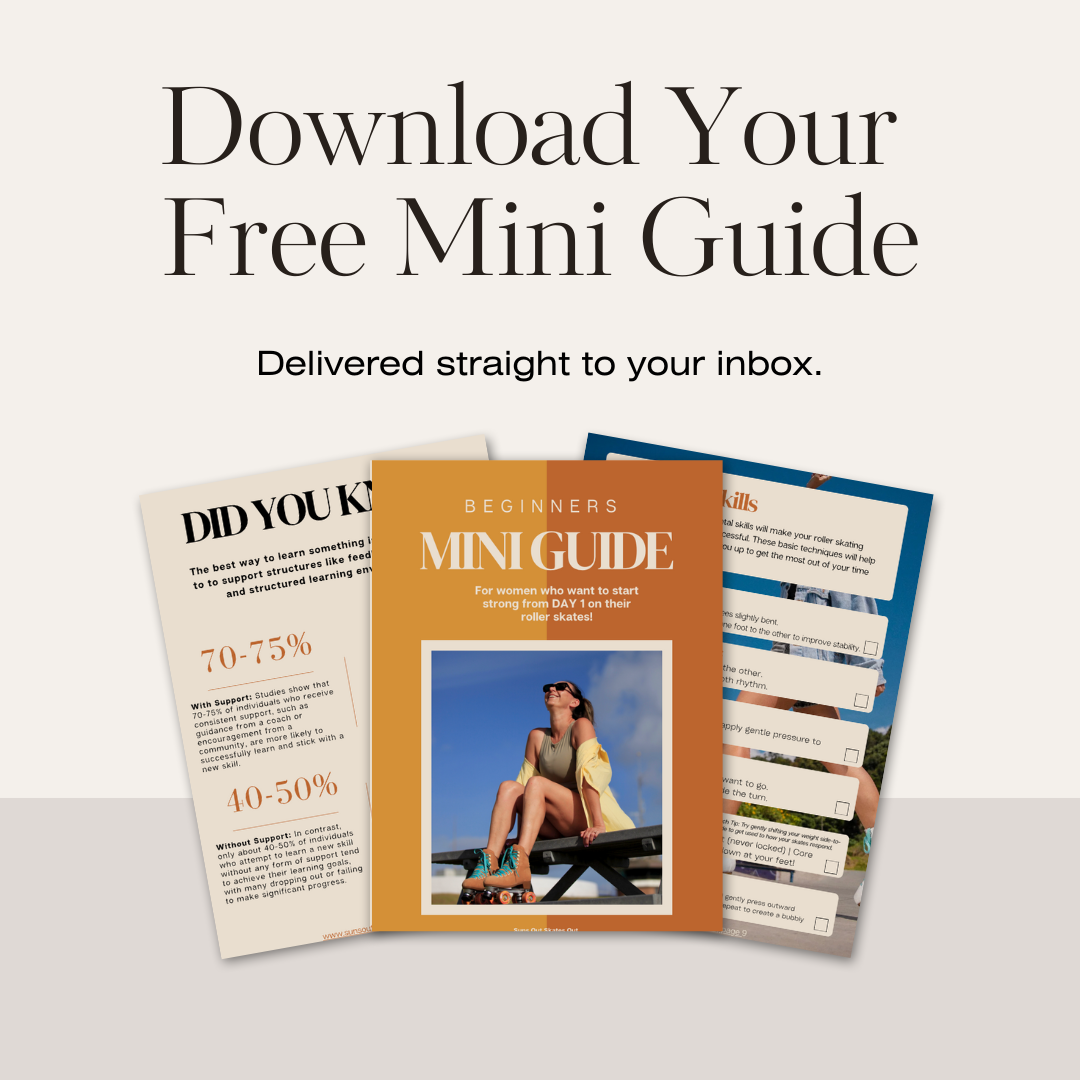
If you're new and want help knowing what to practise first, I created a FREE 5 Day Learn to Roller Skate Series to help adult beginners stop guessing and build confidence step by step.
You'll learn:
✔ beginner skills to focus on first
✔ simple practice ideas
✔ common mistakes slowing progress
✔ ways to build confidence on skates
→ Start the FREE 5 Day Learn to Roller Skate Series here
Because learning later in life shouldn't feel overwhelming.
It should feel exciting!
Want more beginner skating tips?
Join for new videos, articles and skating encouragement 💛
We hate SPAM. We will never sell your information, for any reason.